The UK's premium jewellery and collectables valuers

A Glimpse into Elegance
The 18th Century Gold Snuffbox by Melchior-René Barré
Alana Craig FGA
3/16/20265 min read
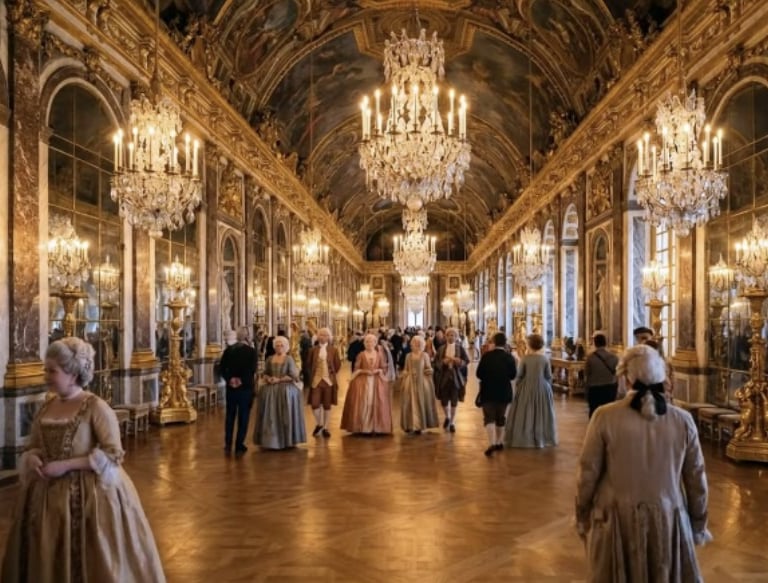
Welcome back to the blog, and a warm hello to all lovers of history and exquisite craftsmanship! Today, we’re stepping into the refined world of 18th-century Paris, a time when luxury was an art form and even the smallest personal item was a masterpiece. Our focus is a stunning object that captures this era perfectly: a truly magnificent three-colored 18k gold snuffbox, a testament to the skill and artistry of a renowned Parisian goldsmith.
But before we delve into the details of this specific piece, let’s paint a picture of the time it was created.
Paris: The Epicenter of 18th Century Luxury
In the 18th century, Paris was undisputed as the leader in the production of high-quality luxury goods. It was a time when the entire Parisian economy thrived on the work of small, highly skilled artisan workshops. These masters of their craft produced a wide range of elegant items, from the grandest furniture to the most delicate pieces of jewelry and personal accessories. Among these, the gold snuffbox was a coveted and admired symbol of status and sophistication.
The Rise of Snuff and the Essential Snuffbox
Snuff, a finely ground tobacco product, had an interesting journey. While tobacco was known in Europe since the late 16th century, its popularity in France as snuff didn’t truly take off until after the death of King Louis XIV in 1715. The 'Sun King' disapproved of tobacco, but with his passing, the court embraced it. By the 1730s, the taking of snuff was firmly at the center of fashionable French customs.
This social shift gave rise to an essential accessory: the snuffbox. By the middle of the century, taking snuff had become an entrenched social ritual, and the snuffbox itself became an important social prop. More than just a container, it was a fashion statement. Merchants even advertised new designs with each change of season!
More Than Meets the Eye: The Snuffbox as Status Symbol
A Parisian gold snuffbox was among the most expensive and desirable status symbols of the day. These weren't just personal items; they were frequently presented as royal gifts to courtiers and ambassadors, often in lieu of cash payments for their services. They were also given to commemorate marriages and as tokens of friendship among the powerful and influential.
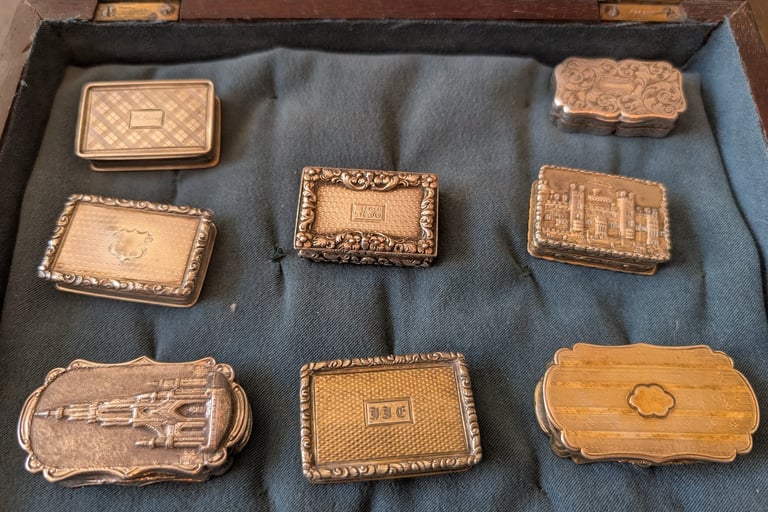
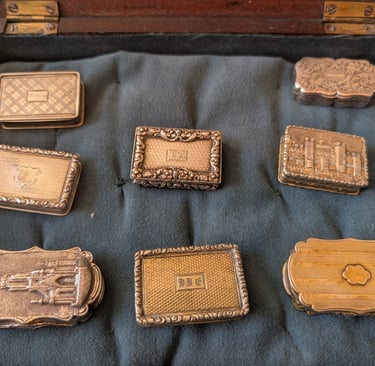
While those who could not afford gold might own boxes made of silver, like these examples from the fine maker Thomas Shaw who registered his mark in 1803 and went on to have his workshop on Caroline street within the heart of Birminghams Silver manufacturing district.
Or perhaps the one of the most well known, Nathaniel Mills, a skilled silversmith working from Birmingham in the early 19th century. Registering his mark with the Birmingham assay office at 1825, Mills quickly became known for luxurious Victorian souvenir silverware, much of his work depicting British landmarks and scenes. After his death in 1843, the business was succeeded by Mills' sons Nathaniel II, William and Thomas, who continued to produce exceptional pieces until 1853.
Working with silver and silver gilt finishes, Nathaniel Mills created exquisitely detailed and often embossed card cases, vinaigrettes, sweetmeat dishes, snuff boxes, wine labels, posy holders, and flasks. Most famously known for these scenic 'castle-top' cases, (as you can see some fabulous examples are in the image above, from a recent event that was purchased by our team) and boxes that were wildly popular in the Victorian times, Nathaniel Mills is a silversmith who is often collected and sought-after.
Other examples were also made from tortoiseshell, porcelain, or even lacquer, the true masterpieces were skillfully crafted from gold. The most elegant examples, like the one we are highlighting today, were further embellished with diamonds, enameled decoration, lacquer, and other luxurious materials.
The taking of snuff itself evolved into a sophisticated performance. It could be an elegant solitary act or a group activity where, as the Victoria & Albert Museum describes, "the act of handling the box and offering snuff evolved into a secret code, the ‘language of the tabatiere.’" Historical records even tell of figures like Carl Alexander von Lothringen, who used specific gestures with his snuffbox to ask his beloved if she would attend a ball. A simple act was infused with a language of its own!
A Closer Look at the Masterpiece by Melchior-René Barré
This brings us to our featured piece, a truly exceptional example of 18th-century French goldsmithing. This magnificent three-colored 18k gold snuffbox is a work of art by the skilled hand of Melchior-René Barré.
Barré was a master of his craft, apprenticed to the renowned goldsmith Jean Frémin in 1751 and becoming a master himself in 1768. He was a prominent figure in the Parisian guild of goldsmiths, moving to the prestigious quai des Orfèvres in 1774. He continued his work until his retirement in 1791.
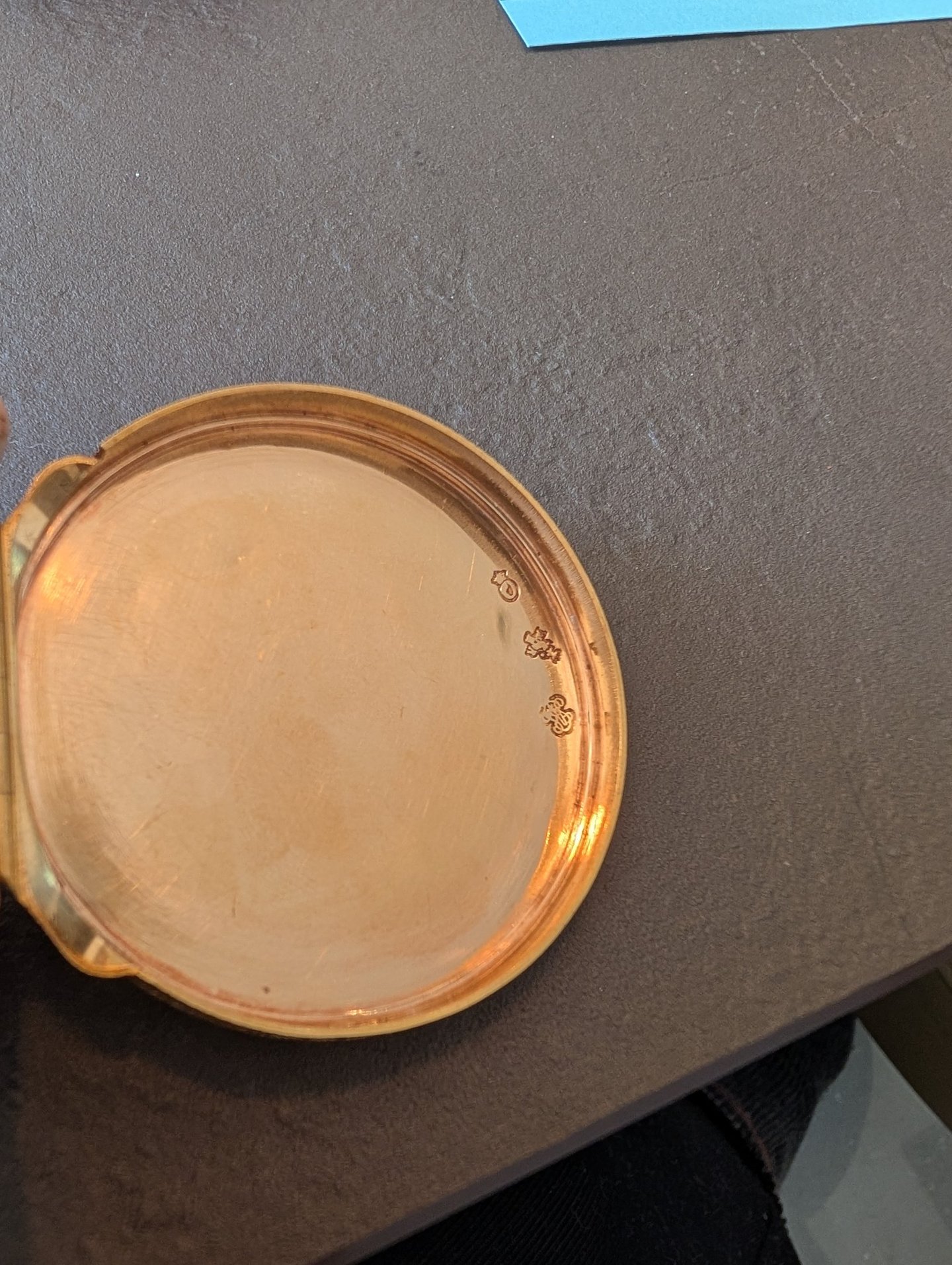
This particular box, hallmarked for Paris between 1777 and 1778, is a perfect illustration of Barré's skill. Let's admire its details:
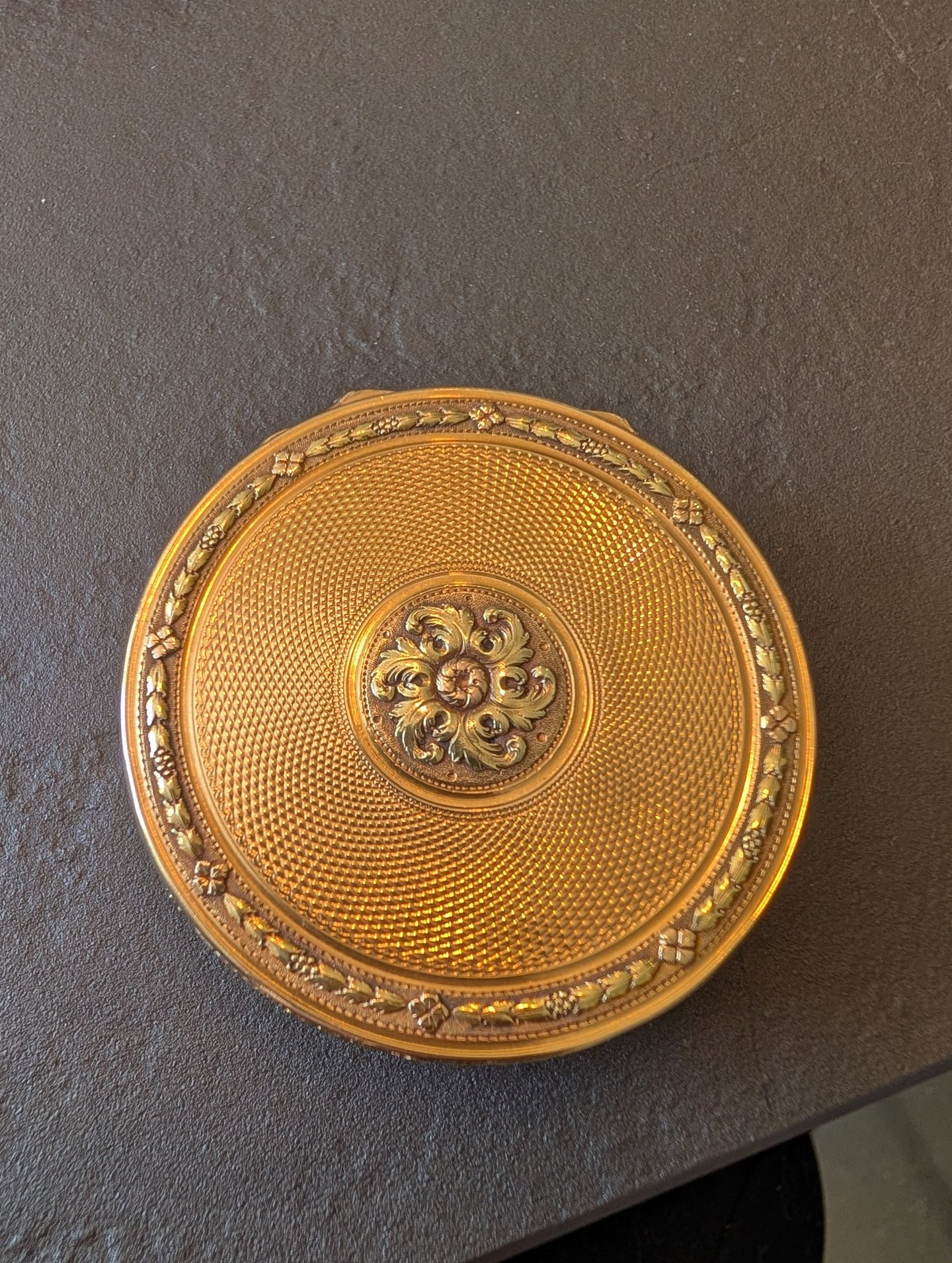
Magnificent Form: This round-form box is made from 18k gold, a high-purity alloy that showcases a rich, deep color. The term "three-colored" refers to the artful use of different gold alloys to create contrasting tones, typically yellow, red (from copper), and green (from silver or other alloys), adding a stunning visual dimension.
Intricate Decoration: The box features beautiful engine-turned decoration, a precise and repetitive geometric pattern that was highly fashionable.
Exquisite Details: The cover and base are centered with a vari-color gold rosette, a blooming focal point of the design. The edges are meticulously chased with flowers and husk garlands, adding a delicate, natural touch.
A Tactile Experience: This intricate work is set against a matted ground, a slightly textured surface that contrasts with the polished gold, adding depth and a tactile quality to the piece.
This box is more than just an antique; it's a physical connection to the elegance and social rituals of a bygone era. It represents the pinnacle of craftsmanship, the importance of status, and the art of living that defined 18th-century Paris.
We hope you enjoyed this journey into the world of the 18th-century gold snuffbox and the remarkable work of Melchior-René Barré. It's a testament to the enduring beauty of handcrafted luxury and the fascinating stories that a simple, elegant object can tell.
J



Contact us
Follow
office@heritagegandc.co.uk
VAT no. 474 3052 00
Company no. 15744780
Heritage Gold and Collectables Limited ®
© 2025. All rights reserved.




VAT no. 474 3052 00
VAT no. 474 3052 00
3rd Floor, 86-90 Paul Street London EC2A 4NE