The UK's premium jewellery and collectables valuers

The History and Evolution of Portrait Miniatures
Faces in the Palm of Your Hand
Fine Art
Alana Craig FGA
09/06/2026 7 Minute read
Long before the convenience of smartphones and digital photography, how did we carry the likenesses of those we loved? The answer lies in the exquisite, intimate world of the portrait miniature.
For centuries, these tiny masterpieces served as the ultimate tokens of love, loyalty, and remembrance. Worn as jewelry, tucked into pockets, or hidden away in secret lockets, portrait miniatures are more than just fine art—they are tangible pieces of human history.
At Heritage Gold and Collectables, we frequently handle these delicate treasures. Understanding their evolution not only deepens our appreciation for the artists who painted them but also helps collectors identify the subtle shifts in fashion, materials, and social history that define each era.
The Evolution of a Miniature Masterpiece
The portrait miniature emerged in the 16th century, growing out of the traditions of illuminated manuscripts and Renaissance medal-making. Initially painted in watercolour on vellum (stretched calfskin) or card, they underwent a major technological revolution in the early 18th century when artists shifted to painting on ivory.
Ivory provided a luminous, translucent ground that beautifully mimicked the glowing quality of human skin. However, it came with steep technical challenges. Because of its naturally greasy surface, early miniaturists struggled to get watercolours to adhere properly. As a result, early ivory miniatures remained quite small—often just 1.5 to 2 inches high.
As techniques advanced and social fashions shifted, the "shapes" of these miniatures changed dramatically:
The Georgian Era (c. 1770–1790): Small, intimate, and highly wearable. Ladies frequently wore them on ribbons or bracelets around their wrists.
The Regency & Wartime Era (c. 1795–1815): The size expanded to 3 or 3.5 inches. Political shifts, including the French Revolution and hair powder taxes, drastically altered how sitters dressed and styled their hair.
The Victorian & Edwardian Eras (1837–1910): Despite the invention of photography in 1839, miniatures endured by offering vibrant colour and luxury that early black-and-white photographs simply could not match.
To truly understand how this art form evolved, we can look at five remarkable artists whose work spans the golden age of British miniaturism to its 20th-century revival.
Five Master Artists Who Shaped the Tradition
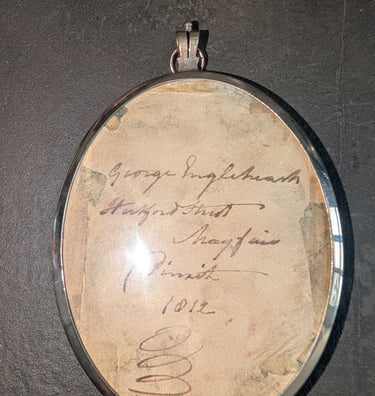
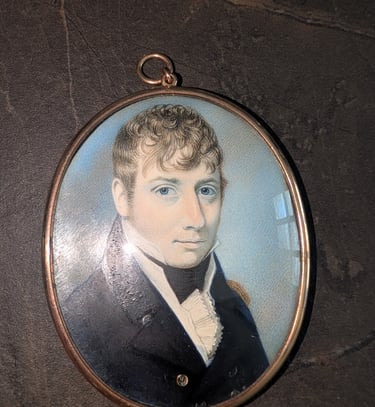
1. George Engleheart (1750–1829): The Prolific Master
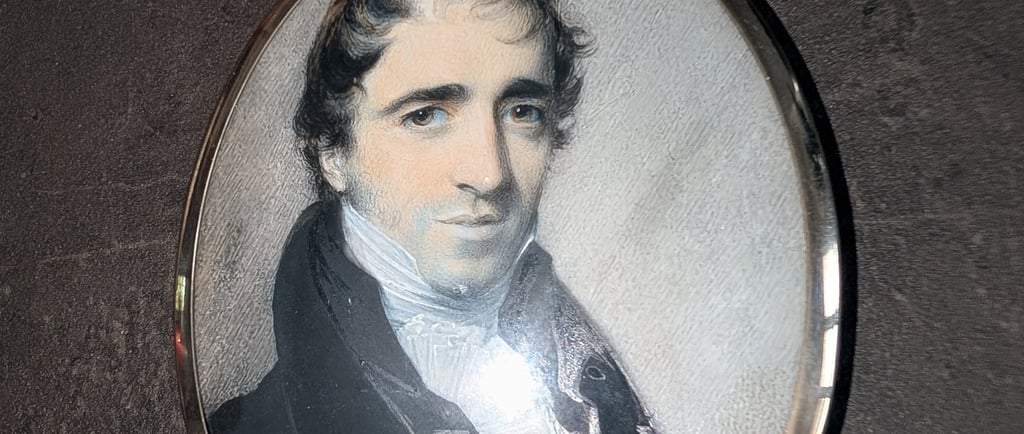
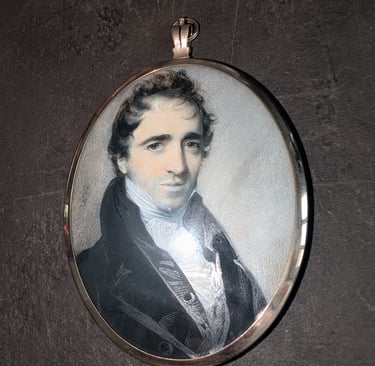
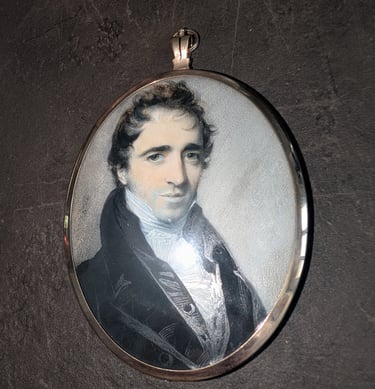
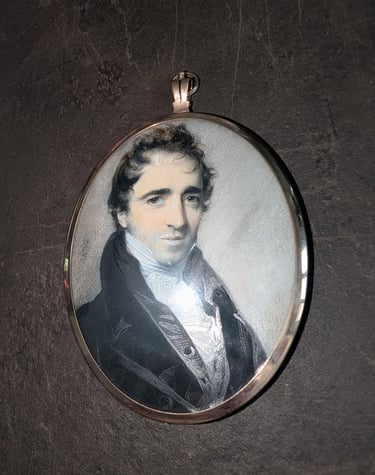
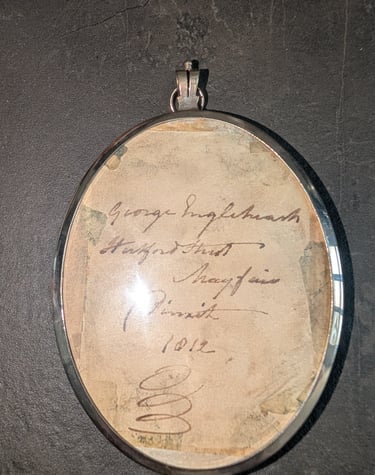
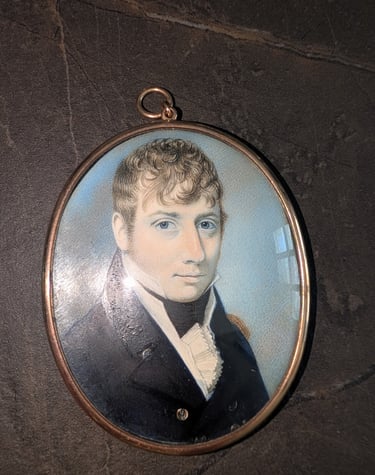
(Image above features; A fine and important portrait miniature of a dark haired gentleman wearing a black jacket, white chemise and frilled cravat. Watercolour on ivory in an oval gold frame, the reverse revealing the artist signature and date. George Engleheart/Pinxit 1812 / Hertford street /Mayfair. Provenanace; The Albion Collection, exibited at the Scottish National Portrait Gallery, Edinburgh 2000-2003. Previously sold at Bonhams in 2004.)
Entering the Royal Academy Schools in 1769, George Engleheart studied under George Barret and Sir Joshua Reynolds before setting out on his own in 1773. Over a phenomenal 39-year career tracked meticulously in his surviving family fee book, Engleheart executed no fewer than 4,853 miniatures. He even painted King George III twenty-five times. His career beautifully reflects the technical evolution of the medium across three distinct phases:
Early Period (c. 1775): Small works (1.5 to 2 inches) designed for bracelets. Features include reddish flesh tones over a pale ground, accentuated with bluish-grey facial tones, sometimes signed 'G.E.'
Middle Period (c. 1780–1795): A growth to 2.5 inches. His highly recognizable style emerged: deep eyes, strong eyebrows, slightly lengthened noses, and a signature cursive 'E' signature in the corner. Women feature high, powdered hair and opaque white dress details; men sport powdered hair pulled back en queue (into a ponytail).
Late Period (c. 1795–1813): Ivories expanded to 3.5 inches. Hair powder disappeared due to a 1795 British tax intended to finance the war with France. Sitters adopted simpler Regency fashions: men looked like country squires with forward-brushed Roman hair, while women wore high-waisted Grecian empire line dresses.
2. Thomas Richmond (1771–1837): The Royal Copyist
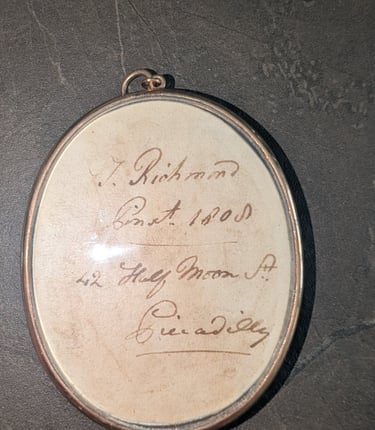
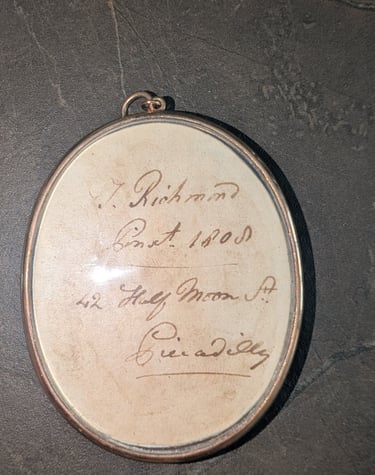
(Image Features A portrait miniature of a young naval officer in uniform, He has dark hair and is wearing a blue jacket with gold buttons and a single gold fringed epaulette. Watercolour on ivory in an oval gold frame, the reverse glazed to reveal signature and date; T Richmond, 1808, 42 Half Moon Street, Piccadilly)
The art of the miniature was frequently a family affair. Thomas Richmond's mother, Ann Bone, was a cousin of George Engleheart, and Thomas naturally became Engleheart's pupil. He was employed by the royal family to copy masterpieces by his tutor and Richard Cosway, alongside miniature reproductions of Sir Joshua Reynolds' grand portraits.
Richmond’s numerous original works are often unsigned and can be found on both ivory and paper. While some of his poses carry the typical rigidity of the era, his drawing, expression, and lifelike quality are outstanding. Working from the height of fashion at 42 Half-Moon Street in Mayfair, he exhibited 46 pieces at the Royal Academy, establishing an artistic lineage that his sons would follow.
3. Miss Ann Mee (c. 1770–1851): The High-Earning Trailblazer
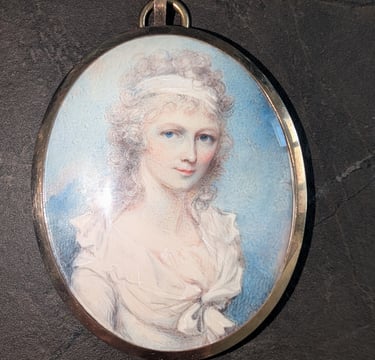
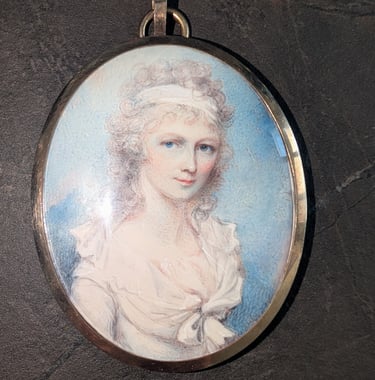
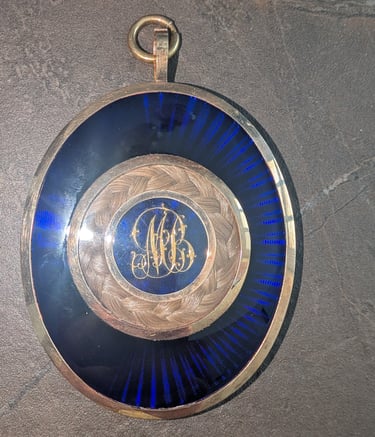
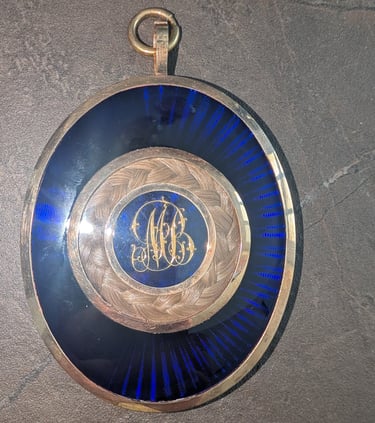
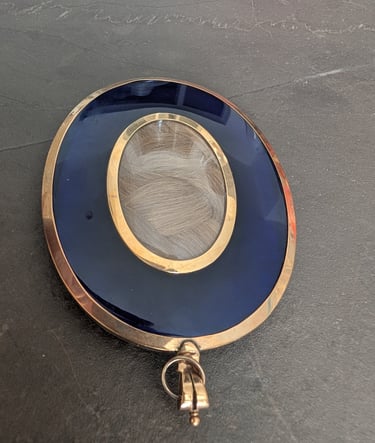
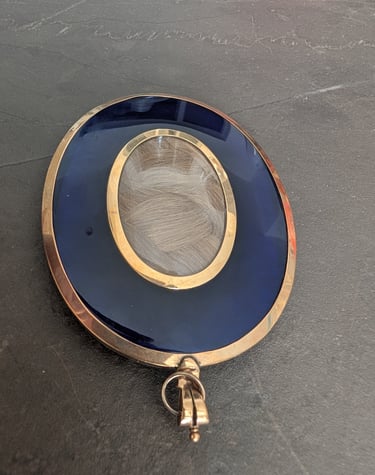
(Above features A miniature portrait of a young lady wearing a low cut white dress and white bandeau in her long curling hair. Watercolour on ivory in an oval frame, the reverse with blue glass and plaited hair and the gold initials MB. Portrait Miniature; ca. 1784-1837 ,Artist/Maker; Mee, Anne, Place of origin; Britain (made)
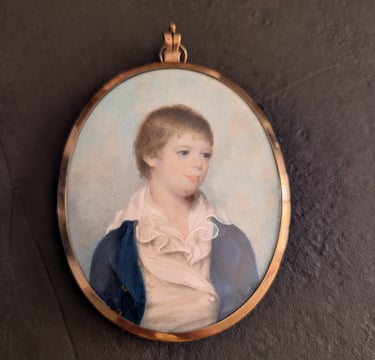
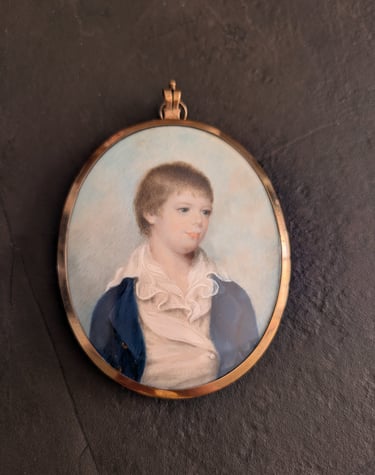
A fine portrait miniature of Thomas Bridgewater weaing a blue jacket, cream waistcoat and a white chemise with a frilled collar. He has blue eyes and light brown hair. Watercolour on ivory in an oval gold frame, the reverse with loosely plaited hair and blue glass. Portrait Miniature; ca. 1784-1837. Artist/Maker; Mee, Anne. Place of origin; Britain )
Anne Mee (née Foldsone) stands out as a brilliant example of a woman succeeding at the absolute highest levels of a male-dominated art world. Trained by her father and mentored by George Romney, she took over her family's financial support at just seventeen.
Mee secured the prestigious patronage of Queen Charlotte and the Prince of Wales. Her practice was exceptionally lucrative, routinely commanding prices that surpassed those of her famous male contemporaries like Richard Cosway. While her husband was fiercely protective—consenting to let her paint only female sitters who could not be attended by gentlemen—he undoubtedly recognized her phenomenal talent and earning power. She remained a fixture at the Royal Academy and British Institution for over three decades.
4. Albin Burt (1783–1842): The Traveling Profile Painter
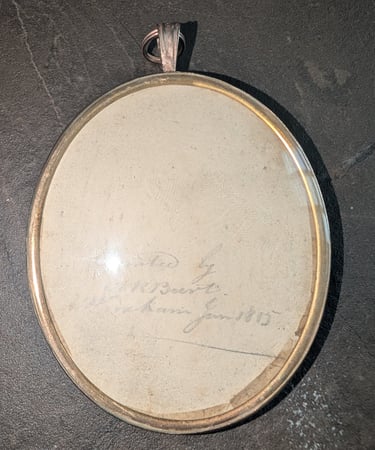
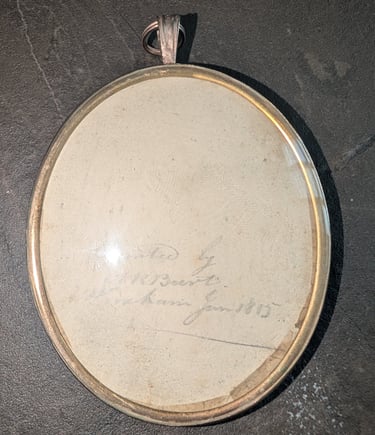
(Above features a Miniature with a side profile of a gentleman with a white cravat and blue jacket on a silver frame. By Albin Burt dated 1815)
Not all miniatures were painted for royalty in Mayfair. Albin Burt represents the itinerant, highly adaptable commercial artist of the early 19th century. Coming from a family with close ties to Lord Nelson and Emma Hamilton—which likely allowed him to paint Lady Hamilton from life—Burt worked as an engraver, cameo carver, silhouette artist, and miniaturist.
Burt traveled tirelessly across the UK, setting up temporary studios in Bath, Worcester, Birmingham, Oxford, Chester, and Southampton. To appeal to the public, he advertised a "new invented machine" that allowed him to take rapid, accurate likenesses. He offered affordable, colored profiles on card for half a guinea, or more finished versions for a single guinea, frequently signing the back with his location and the date.
5. Alfred Praga (1867–1949): Carrying the Flame into the 20th Century
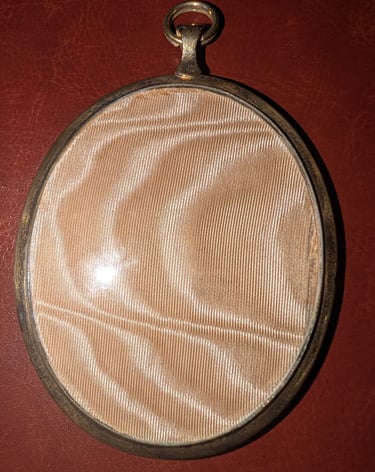
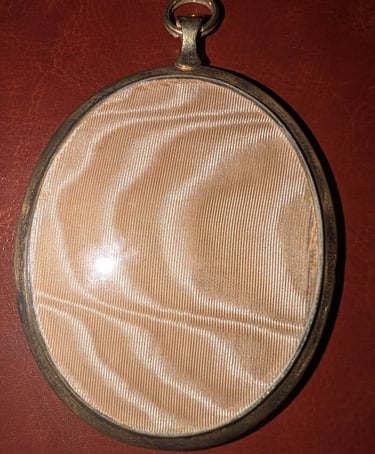
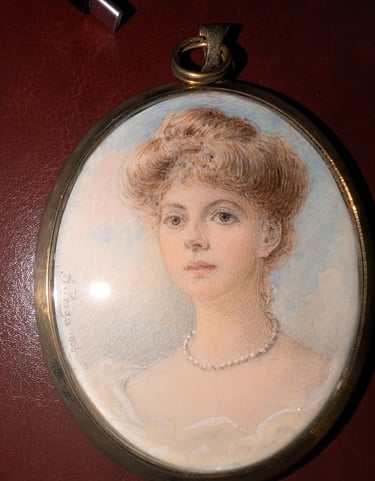
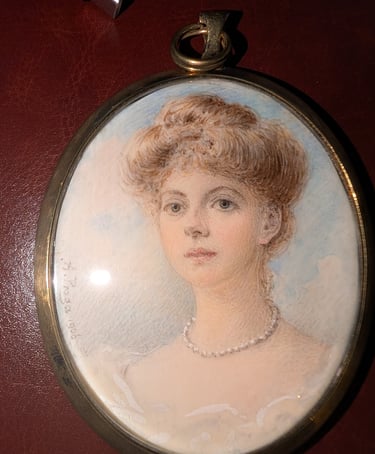
(Image above features Alfred Praga 1906 A portrait miniature of a young lady with Hazel eyes and light brown hair. She is wearing a low cut white dress and a strand of pearls around her neck. Watercolour on ivory in a oval gilt frame with cream coloured silk to reverse)
As the 19th century drew to a close, portrait miniatures faced an existential threat from photography. Enter Alfred Praga. Originally sent to Paris to study medicine, Praga fell in love with the masterpieces in the Louvre and pivoted permanently to fine art.
Praga became a founding member of the Society of Miniaturists in 1895 and served as its President from 1899 until his death in 1949. He kept the tradition alive by painting prominent modern figures, including King Edward VII, and even contributed a tiny portrait of Princess Marie Louise to Queen Mary’s famous Dolls' House collection. Thanks to champions like Praga, the delicate craft of the miniaturist survived well into the modern era.
Collecting and Identifying Portrait Miniatures
When evaluating a portrait miniature, look closely at the details. The size of the ivory, the hairstyle of the sitter, the presence of opaque white paint accents, or the style of the initials on the reverse all tell a precise story about when and by whom it was created.
Because of their delicate nature and historical value, buying or selling portrait miniatures requires a trusted hand. At Heritage Gold and Collectables, we pride ourselves on our deep historical knowledge and commitment to authenticity. Whether you are looking to value an inherited family heirloom or add a rare piece of social history to your collection, we are here to provide expert, friendly guidance.
Are you holding a piece of history? If you have a portrait miniature you would like identified, valued, or safely appraised, contact our team today or visit us online at www.heritagegandc.co.uk or


Faces in the Palm of Your Hand
The History and Evolution of Portrait Miniatures
FINE ART
Alana Craig FGA
6/8/20267 min read
Contact us
Follow
office@heritagegandc.co.uk
VAT no. 474 3052 00
Company no. 15744780
Heritage Gold and Collectables Limited ®
© 2025. All rights reserved.




VAT no. 474 3052 00
VAT no. 474 3052 00
3rd Floor, 86-90 Paul Street London EC2A 4NE